



High - density PVC foam has gained significant popularity in various industries due to its excellent physical properties such as high strength, good chemical resistance, and lightweight characteristics. One of the frequently asked questions by our customers, as a high - density PVC foam supplier, is whether high - density PVC foam can be glued easily. In this blog, we will explore this topic in detail.
Understanding High - Density PVC Foam
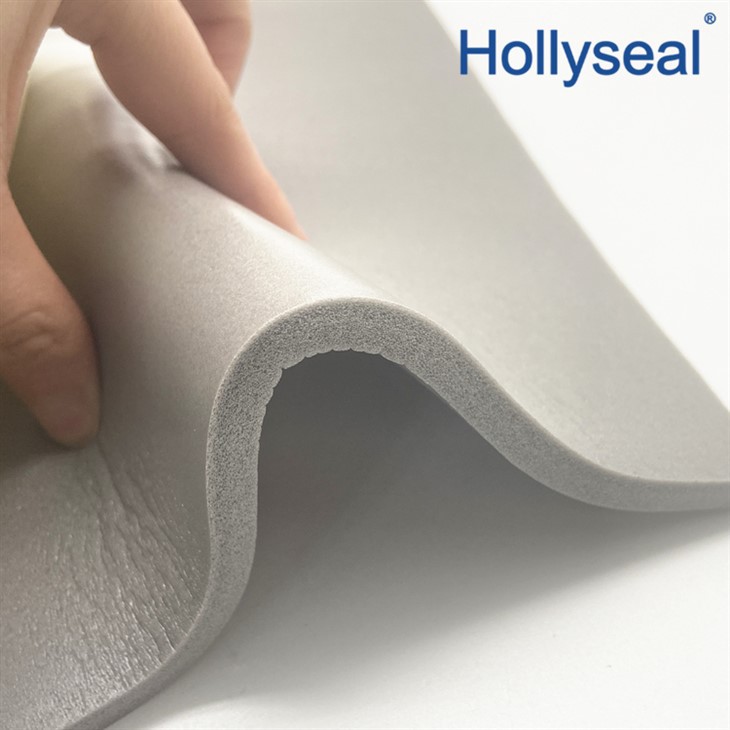
High - density PVC foam is a cellular plastic material made from polyvinyl chloride (PVC). Through a special foaming process, it forms a closed - cell structure. This structure gives it unique properties. Compared with low - density PVC foam, high - density PVC foam has a more compact cell arrangement, which results in higher mechanical strength and better dimensional stability.
Our company offers a wide range of high - density PVC foam products, including Quick Recovery PVC Foam, White PVC Foam, and Low Density Quick Recovery Grey PVC Foam. Each product has its own specific application scenarios based on its density and other properties.
Factors Affecting the Gluing of High - Density PVC Foam
Surface Energy
The surface energy of high - density PVC foam plays a crucial role in the gluing process. PVC has a relatively low surface energy, which means that adhesives may have difficulty wetting the surface. When an adhesive cannot wet the surface properly, it cannot form a strong bond. To improve the surface energy, surface treatment methods such as corona treatment, plasma treatment, or chemical etching can be used. These treatments can introduce polar groups on the surface of the PVC foam, increasing its surface energy and enhancing the adhesion of the adhesive.
Adhesive Compatibility
Not all adhesives are suitable for high - density PVC foam. The compatibility between the adhesive and the PVC foam is essential. For example, some solvents in adhesives may dissolve or swell the PVC foam, leading to a weak bond or even damage to the foam. Adhesives based on acrylic, epoxy, and polyurethane are commonly used for PVC foam. Acrylic adhesives offer good weather resistance and fast curing speed. Epoxy adhesives provide high - strength bonds and excellent chemical resistance. Polyurethane adhesives have good flexibility and impact resistance.
Environmental Conditions
The environmental conditions during the gluing process also affect the bonding quality. Temperature and humidity are two important factors. Most adhesives have an optimal temperature range for curing. If the temperature is too low, the curing process may be slow or incomplete, resulting in a weak bond. High humidity can also affect the curing of some adhesives, especially those that are sensitive to moisture.
Gluing Methods for High - Density PVC Foam
Pre - treatment of the Surface
Before gluing, the surface of the high - density PVC foam should be cleaned to remove any dirt, grease, or dust. A mild detergent and water can be used for cleaning, followed by thorough drying. As mentioned earlier, surface treatment can also be carried out to improve the surface energy.
Selecting the Right Adhesive
As a high - density PVC foam supplier, we recommend choosing an adhesive based on the specific application requirements. For applications that require high - strength bonding, such as in the construction of structural components, epoxy adhesives are a good choice. For applications that need flexibility, polyurethane adhesives may be more suitable.

Application of the Adhesive
The adhesive should be applied evenly on the surface of the PVC foam. The amount of adhesive applied is also important. Too little adhesive may result in an insufficient bond, while too much adhesive can cause problems such as excessive squeeze - out and longer curing times. After applying the adhesive, the two surfaces to be bonded should be brought together firmly and held in place for the required curing time.
Case Studies
Construction Industry
In the construction industry, high - density PVC foam is often used for insulation and decorative purposes. For example, when installing PVC foam panels on a wall, a suitable adhesive is required to ensure a strong and long - lasting bond. By using an epoxy adhesive and proper surface treatment, the panels can be securely attached to the wall, providing good insulation and a smooth finish.
Automotive Industry
In the automotive industry, high - density PVC foam is used for interior components such as door panels and seat cushions. Polyurethane adhesives are commonly used to bond the foam to other materials. The flexibility of the polyurethane adhesive allows the foam to withstand the vibrations and movements in the vehicle, ensuring a stable bond.
Tips for Easy Gluing
- Test the Adhesive: Before starting a large - scale gluing project, it is advisable to conduct a small - scale test to ensure the compatibility between the adhesive and the high - density PVC foam.
- Follow the Manufacturer's Instructions: Adhesive manufacturers provide detailed instructions on the application, curing time, and environmental conditions. Following these instructions carefully can help achieve the best bonding results.
- Use Clamps or Weights: To ensure good contact between the bonded surfaces during the curing process, clamps or weights can be used to apply pressure.
Conclusion
In conclusion, high - density PVC foam can be glued, but it requires careful consideration of several factors such as surface energy, adhesive compatibility, and environmental conditions. By following the proper gluing methods and using the right adhesive, a strong and reliable bond can be achieved.
As a leading high - density PVC foam supplier, we are committed to providing high - quality products and technical support to our customers. If you are interested in our high - density PVC foam products or have any questions about gluing them, please feel free to contact us for further discussion and procurement negotiation. We look forward to working with you to meet your specific needs.
References
- "Plastic Foams: Technology and Applications" by Ludwig Bottenbruch
- "Adhesives Technology Handbook" by Andrew Pizzi and K. L. Mittal