


As a dedicated supplier of PVC Foam Board, I've witnessed firsthand the versatility and remarkable potential of this material. PVC Foam Board, known for its lightweight, durability, and cost - effectiveness, has become a staple in various industries. However, its true magic often lies in its ability to be combined with other materials, opening up a world of possibilities for innovation and creativity. In this blog, I'll share some insightful ways on how to combine PVC Foam Board with other materials.
Combining with Wood
Wood is a classic and widely used material, and when paired with PVC Foam Board, it can create products that blend the natural charm of wood with the practicality of PVC. For furniture making, a common approach is to use PVC Foam Board as a core material and then veneer it with a thin layer of wood. This technique not only reduces the weight of the furniture but also cuts down on costs, as PVC Foam Board is generally more affordable than solid wood.
To achieve a seamless combination, we first need to ensure that the surfaces are clean and smooth. Sanding the PVC Foam Board and the wood veneer slightly can improve adhesion. Then, a high - quality wood glue can be applied evenly on the surface of the PVC Foam Board. Carefully place the wood veneer on top, making sure to align it properly. Using a roller or a press can help to remove any air bubbles and ensure a strong bond. The result is a piece of furniture that has the aesthetic appeal of wood on the outside and the stability and lightness of PVC Foam Board inside.
In construction, wooden frames can be combined with PVC Foam Board panels. The wooden frames provide structural support, while the PVC Foam Board panels can be used as infill. This combination is commonly seen in partition walls. The wood frames can be pre - assembled, and then the PVC Foam Board panels are attached using screws or adhesives. This creates a partition that is both sturdy and easy to install.
Merging with Metal
Metal is another material that pairs well with PVC Foam Board. In signage applications, metal frames can be used to enhance the durability and aesthetic of PVC Foam Board signs. For example, an aluminum frame can be custom - fabricated to fit around a PVC Foam Board sign. The metal frame not only protects the edges of the PVC Foam Board but also gives the sign a more professional and high - end look.
To attach the PVC Foam Board to the metal frame, mechanical fasteners such as screws or rivets can be used. When using screws, pre - drill holes in the PVC Foam Board to prevent cracking. Another option is to use industrial - strength adhesives designed for bonding plastic and metal. Before applying the adhesive, clean the surfaces thoroughly to remove any dirt, grease, or oxidation.
In the automotive industry, PVC Foam Board can be combined with metal components for interior trim. Metal inserts can be embedded into the PVC Foam Board to add strength and a decorative touch. This requires precision machining of the PVC Foam Board to create the appropriate recesses for the metal inserts. Once the inserts are in place, they can be secured with adhesives or small mechanical fasteners.

Blending with Glass
Combining PVC Foam Board with glass can result in unique and functional products. In interior design, glass panels can be paired with PVC Foam Board to create modern and stylish partitions or display cases. The transparency of the glass allows for visibility, while the PVC Foam Board provides support and structure.
To combine them, we can use a combination of adhesives and mechanical fasteners. Silicone adhesives are often a good choice as they are flexible and can withstand some movement. First, apply the silicone adhesive along the edges of the PVC Foam Board where the glass will be attached. Then, carefully place the glass panel on top and hold it in place until the adhesive sets. For added security, small metal clips or brackets can be used to hold the glass in place.
Incorporating with Fabrics
Fabrics can be used to cover PVC Foam Board to create soft - edged and aesthetically pleasing products. In the field of upholstery, PVC Foam Board can be used as a base for cushions or seats. Stretch fabrics are particularly suitable for this application.
To cover the PVC Foam Board with fabric, start by measuring and cutting the fabric to the appropriate size, leaving some extra material for wrapping around the edges. Apply a thin layer of fabric glue on the surface of the PVC Foam Board. Carefully place the fabric on top and smooth it out to remove any wrinkles. Wrap the excess fabric around the edges of the PVC Foam Board and secure it with staples or more glue.
Specialized PVC Foam Board Combinations
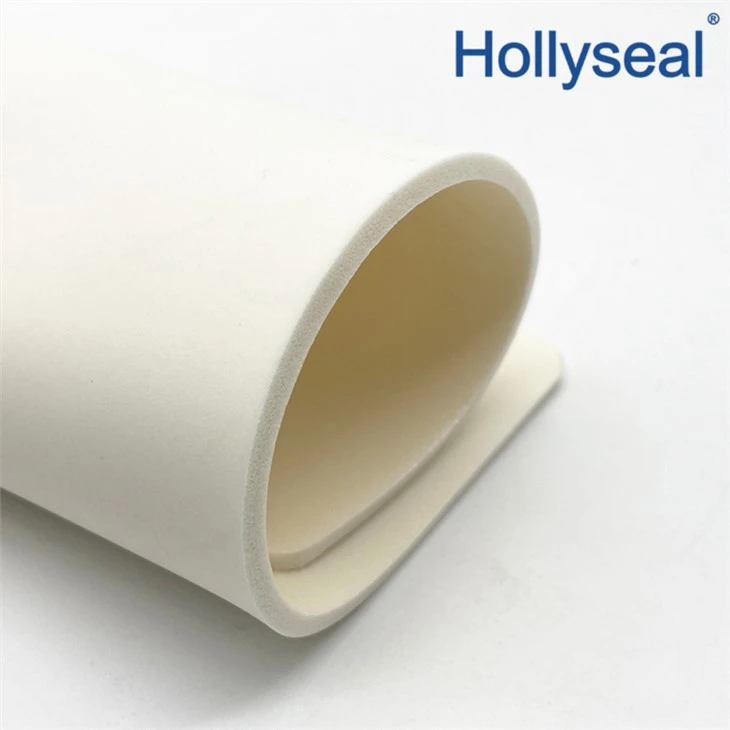
As a PVC Foam Board supplier, we offer a range of specialized PVC Foam Board products, such as Water Seal PVC Foam, Closed Cell High Temperature PVC Foam, and PVC Vinyl Foam Material. These materials can be combined with other substances in unique ways.
Water Seal PVC Foam is ideal for applications where moisture resistance is crucial. It can be combined with waterproof fabrics or rubber gaskets in outdoor enclosures. The water - seal properties of the PVC Foam Board prevent water from seeping in, while the additional materials enhance the overall waterproofing effect.
Closed Cell High Temperature PVC Foam can be used in high - heat environments. It can be combined with heat - resistant metals or ceramics. For example, in industrial ovens, the PVC Foam Board can be used as an insulating layer, and the heat - resistant metal can be used as a protective outer layer.
PVC Vinyl Foam Material is known for its flexibility and softness. It can be combined with other flexible materials such as rubber or soft plastics to create products like shock - absorbing pads or flexible seals.
Conclusion
The possibilities of combining PVC Foam Board with other materials are truly endless. Whether it's for furniture, construction, signage, or automotive applications, these combinations can enhance the functionality, durability, and aesthetic appeal of the final products. As a PVC Foam Board supplier, we are committed to providing high - quality materials and supporting our customers in exploring these creative combinations.
If you are interested in learning more about our PVC Foam Board products or discussing potential combinations for your projects, we encourage you to reach out. Our team of experts is ready to assist you in making the most of PVC Foam Board in your applications. Contact us today to start a procurement discussion and bring your innovative ideas to life.
References
- "Plastic Materials in Construction" by John Summerscales
- "Wood - Plastic Composites: Materials, Processing, and Products" by George A. Kraus
- "Metal - Polymer Composites: Fundamentals and Applications" by S. V. Lomov