



As a supplier of PVC foam tape, I'm often asked about the composition of this versatile product. PVC foam tape is a widely used material in various industries due to its unique properties and multiple applications. In this blog post, I'll delve into the components that make up PVC foam tape, explore its manufacturing process, and discuss its key features and benefits.
The Basics of PVC Foam Tape
PVC, or polyvinyl chloride, is a synthetic plastic polymer that is known for its durability, flexibility, and chemical resistance. PVC foam tape is made by combining PVC resin with other additives and blowing agents to create a foam structure. The foam structure gives the tape its unique properties, such as low density, high compressibility, and excellent cushioning.
Composition of PVC Foam Tape
The composition of PVC foam tape typically includes the following components:
1. PVC Resin
PVC resin is the primary component of PVC foam tape. It provides the tape with its basic structure and mechanical properties. The quality and type of PVC resin used can significantly affect the performance of the tape. High-quality PVC resin ensures better durability, flexibility, and chemical resistance.
2. Plasticizers
Plasticizers are added to PVC resin to increase its flexibility and reduce its hardness. They work by embedding themselves between the polymer chains of PVC, allowing them to move more freely. Common plasticizers used in PVC foam tape include phthalates, adipates, and trimellitates. The choice of plasticizer depends on the desired properties of the tape, such as flexibility, temperature resistance, and compatibility with other materials.
3. Blowing Agents
Blowing agents are substances that release gas when heated, creating a foam structure in the PVC resin. There are two main types of blowing agents used in PVC foam tape: physical blowing agents and chemical blowing agents. Physical blowing agents, such as hydrocarbons and chlorofluorocarbons (CFCs), evaporate when heated, leaving behind gas bubbles. Chemical blowing agents, on the other hand, decompose when heated, releasing gas. The use of blowing agents allows the tape to have a low density and high compressibility.
4. Stabilizers
Stabilizers are added to PVC foam tape to prevent degradation caused by heat, light, and oxygen. They work by reacting with the free radicals generated during the degradation process, preventing them from causing further damage to the PVC resin. Common stabilizers used in PVC foam tape include lead salts, calcium-zinc compounds, and organotin compounds. The choice of stabilizer depends on the application of the tape and the environmental conditions it will be exposed to.
5. Fillers
Fillers are added to PVC foam tape to improve its mechanical properties, reduce its cost, and enhance its fire resistance. Common fillers used in PVC foam tape include calcium carbonate, talc, and silica. Fillers can also affect the appearance and texture of the tape.
6. Adhesive Layer
The adhesive layer is an important component of PVC foam tape as it allows the tape to adhere to various surfaces. The type of adhesive used depends on the application of the tape and the surface it will be applied to. Common adhesives used in PVC foam tape include acrylic adhesives, rubber adhesives, and silicone adhesives.
Manufacturing Process of PVC Foam Tape
The manufacturing process of PVC foam tape typically involves the following steps:
1. Mixing
The PVC resin, plasticizers, blowing agents, stabilizers, and fillers are mixed together in a high-speed mixer to form a homogeneous mixture. The mixing process is crucial as it ensures that all the components are evenly distributed throughout the mixture.
2. Extrusion
The mixed material is then fed into an extruder, where it is heated and melted. The molten material is then forced through a die to form a continuous sheet of PVC foam. The thickness and width of the sheet can be controlled by adjusting the die and the extrusion speed.
3. Foaming
As the PVC sheet exits the extruder, it passes through a foaming oven, where the blowing agents are activated. The blowing agents release gas, creating a foam structure in the PVC sheet. The foaming process is carefully controlled to ensure that the foam has the desired density and cell structure.
4. Cooling and Calendering
After foaming, the PVC foam sheet is cooled to solidify the foam structure. It is then passed through a series of calender rolls to smooth the surface and adjust the thickness of the sheet.
5. Coating
The cooled and calendered PVC foam sheet is then coated with an adhesive layer on one or both sides. The adhesive is applied using a coating machine, and the thickness of the adhesive layer can be controlled by adjusting the coating speed and the amount of adhesive applied.
6. Cutting and Packaging
The coated PVC foam tape is then cut into the desired lengths and widths using a cutting machine. The cut tapes are then packaged in rolls or sheets for storage and transportation.
Key Features and Benefits of PVC Foam Tape
PVC foam tape offers several key features and benefits, making it a popular choice in various industries. Some of the main features and benefits of PVC foam tape include:
1. Excellent Sealing Properties
PVC foam tape has excellent sealing properties, making it ideal for use in applications where air, water, or dust need to be sealed out. It can conform to irregular surfaces and provide a tight seal, preventing leakage and contamination. You can find our PVC Foam Tape For Sealing which is specifically designed for such applications.
2. High Compressibility
The foam structure of PVC foam tape allows it to be highly compressible. It can be compressed to a fraction of its original thickness and still recover its shape when the pressure is removed. This property makes it suitable for use in applications where a cushioning effect is required, such as in gaskets and seals.
3. Good Chemical Resistance
PVC foam tape has good chemical resistance, making it resistant to many chemicals, solvents, and oils. This property makes it suitable for use in applications where it may come into contact with various chemicals, such as in the automotive and industrial sectors.
4. Weather Resistance
PVC foam tape has good weather resistance, making it suitable for outdoor applications. It can withstand exposure to sunlight, rain, and extreme temperatures without deteriorating or losing its properties.
5. Easy to Use
PVC foam tape is easy to use and can be cut to the desired length and width using a pair of scissors or a knife. It can be easily applied to various surfaces using pressure-sensitive adhesive, making it a convenient solution for many applications.

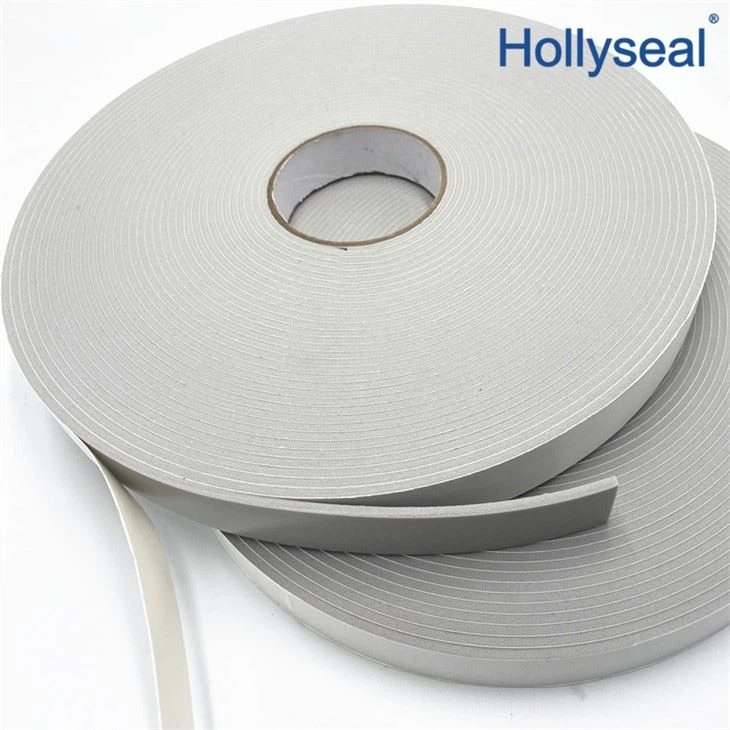
Applications of PVC Foam Tape
PVC foam tape is used in a wide range of applications across various industries. Some of the common applications of PVC foam tape include:
1. Construction
In the construction industry, PVC foam tape is used for sealing windows, doors, and joints to prevent air and water leakage. It is also used as a cushioning material in flooring and wall installations. Our Foam Sealing Strip is a great option for construction applications.
2. Automotive
In the automotive industry, PVC foam tape is used for sealing doors, windows, and trunk lids to reduce noise and vibration. It is also used as a cushioning material in seats and dashboards.
3. Electronics
In the electronics industry, PVC foam tape is used for sealing electronic enclosures to protect against dust and moisture. It is also used as a cushioning material for delicate components.
4. Packaging
In the packaging industry, PVC foam tape is used for cushioning and protecting products during transportation. It can also be used for sealing packages to prevent tampering.
5. Marine
In the marine industry, PVC foam tape is used for sealing hatches, ports, and joints to prevent water leakage. It is also used as a cushioning material in boat seats and interiors.
Conclusion
PVC foam tape is a versatile and widely used material that offers excellent sealing, cushioning, and chemical resistance properties. Its composition, which includes PVC resin, plasticizers, blowing agents, stabilizers, fillers, and an adhesive layer, gives it its unique properties and makes it suitable for a wide range of applications. As a supplier of PVC foam tape, we are committed to providing high-quality products that meet the needs of our customers. If you are interested in purchasing PVC foam tape or have any questions about our products, please feel free to contact us for more information and to discuss your specific requirements. We look forward to working with you.
References
- "Polyvinyl Chloride (PVC) - Properties, Applications, and Manufacturing." Plastics Technology, https://www.plasticstechnology.com/materials/polyvinyl-chloride-pvc-properties-applications-and-manufacturing.
- "Foam Tape: Types, Applications, and Benefits." Tape Jungle, https://www.tapejungle.com/foam-tape-types-applications-benefits/.
- "PVC Foam Tape: A Comprehensive Guide." Industrial Tape Solutions, https://www.industrialtapesolutions.com/pvc-foam-tape-comprehensive-guide/.