


As a supplier of PVC Foam Board, I am often asked about the raw materials used in its production. PVC Foam Board, known for its versatility and durability, is a popular choice in various industries, including advertising, construction, and furniture manufacturing. Understanding the raw materials that go into making PVC Foam Board can provide valuable insights into its quality, performance, and applications.
Polyvinyl Chloride (PVC) Resin
The primary raw material in PVC Foam Board is polyvinyl chloride resin. PVC is a synthetic thermoplastic polymer that is derived from vinyl chloride monomers. It is one of the most widely used plastics in the world due to its excellent chemical resistance, durability, and cost - effectiveness.
PVC resin comes in different grades, which can affect the properties of the final PVC Foam Board. For example, high - molecular - weight PVC resins can result in a more rigid and strong foam board, while low - molecular - weight resins may produce a more flexible product. The choice of PVC resin grade depends on the specific requirements of the application, such as the need for high strength, flexibility, or chemical resistance.

Plasticizers
Plasticizers are added to PVC resin to increase its flexibility and workability. These substances are small molecules that insert themselves between the polymer chains of PVC, reducing the intermolecular forces and allowing the chains to move more freely. This results in a more ductile and flexible material.
Common plasticizers used in PVC Foam Board production include phthalates, which have been widely used for their excellent plasticizing properties. However, due to concerns about their potential health and environmental impacts, there has been a growing trend towards using alternative plasticizers, such as adipates, trimellitates, and epoxidized soybean oil. These alternative plasticizers offer similar performance while being more environmentally friendly.
Stabilizers
PVC resin is prone to degradation when exposed to heat, light, and oxygen. Stabilizers are added to prevent this degradation and maintain the integrity of the PVC Foam Board over time. There are two main types of stabilizers used in PVC production: heat stabilizers and light stabilizers.
Heat stabilizers protect the PVC from thermal degradation during processing, such as extrusion or molding. They prevent the PVC from turning yellow, losing its strength, or becoming brittle. Common heat stabilizers include lead - based, calcium - zinc - based, and organic tin - based stabilizers. Light stabilizers, on the other hand, protect the PVC from ultraviolet (UV) radiation, which can cause discoloration and degradation. Hindered amine light stabilizers (HALS) are commonly used for this purpose.
Foaming Agents
Foaming agents are essential for creating the cellular structure in PVC Foam Board. They decompose at a specific temperature during the processing of PVC, releasing gas and creating bubbles within the PVC matrix. The resulting foam structure gives the PVC Foam Board its lightweight, insulating, and cushioning properties.
There are two main types of foaming agents: chemical foaming agents and physical foaming agents. Chemical foaming agents, such as azodicarbonamide, decompose chemically to release gas. Physical foaming agents, such as carbon dioxide or nitrogen, are injected into the PVC melt under pressure, and when the pressure is released, the gas expands to form bubbles.
Fillers
Fillers are added to PVC Foam Board for various reasons, including reducing the cost, improving the mechanical properties, and enhancing the processing characteristics. Common fillers used in PVC Foam Board production include calcium carbonate, talc, and mica.
Calcium carbonate is one of the most widely used fillers in PVC applications. It is inexpensive and can improve the stiffness, dimensional stability, and heat resistance of the PVC Foam Board. Talc and mica can also enhance the mechanical properties, such as flexural strength and impact resistance, of the foam board.
Pigments
Pigments are used to give PVC Foam Board its color. They can be either organic or inorganic. Organic pigments offer a wide range of bright and vivid colors, while inorganic pigments are known for their excellent lightfastness and chemical resistance.
The choice of pigment depends on the specific color requirements, as well as the environmental conditions the PVC Foam Board will be exposed to. For outdoor applications, pigments with high UV resistance are preferred to prevent color fading over time.
Processing Aids
Processing aids are used to improve the processing characteristics of PVC during the production of PVC Foam Board. They can help reduce the melt viscosity, improve the dispersion of other additives, and enhance the surface finish of the final product.
Common processing aids include lubricants, such as polyethylene wax and stearic acid, which reduce the friction between the PVC melt and the processing equipment, making it easier to extrude or mold the PVC Foam Board. Other processing aids, such as impact modifiers, can improve the impact resistance of the PVC Foam Board during processing.
Applications and Product Examples
PVC Foam Board is widely used in various industries due to its excellent properties. In the advertising industry, it is used for making signs, displays, and exhibition stands. In the construction industry, it can be used for interior decoration, wall panels, and ceiling tiles. In the furniture manufacturing industry, it is used for making furniture components, such as cabinet doors and drawer fronts.
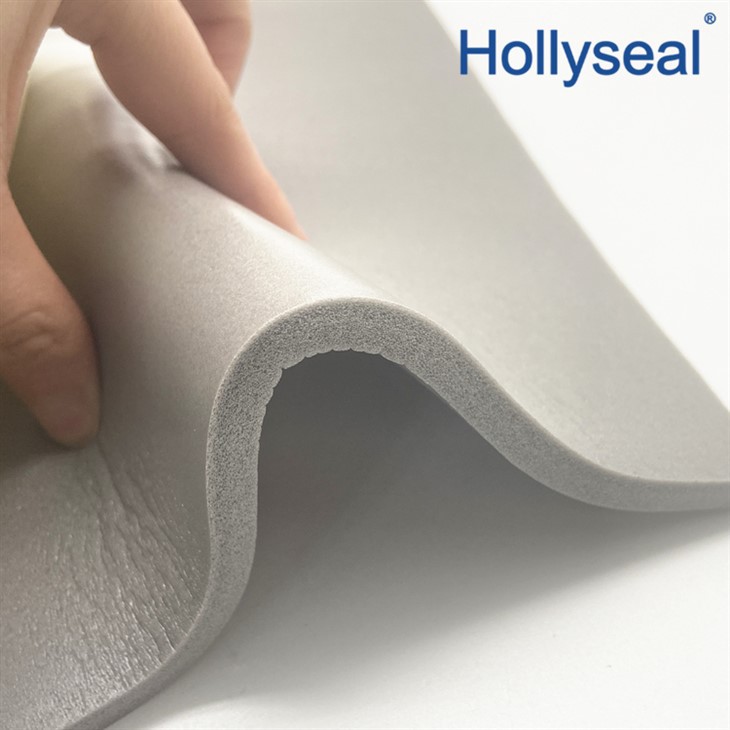
As a PVC Foam Board supplier, we offer a wide range of products to meet the different needs of our customers. For example, our 1mm Medium Density PVC Foam is suitable for applications that require a balance of strength and flexibility. Our PVC Vinyl Foam Material is known for its excellent chemical resistance and is widely used in industrial applications. And our Low Density Quick Recovery Grey PVC Foam is ideal for applications that require cushioning and quick recovery, such as packaging.
Conclusion and Call to Action
In conclusion, the production of PVC Foam Board involves a careful selection and combination of various raw materials, including PVC resin, plasticizers, stabilizers, foaming agents, fillers, pigments, and processing aids. Each of these raw materials plays a crucial role in determining the properties and performance of the final product.
If you are in the market for high - quality PVC Foam Board, we invite you to contact us for a detailed discussion about your specific requirements. Whether you need a customized solution or a standard product, our team of experts is ready to assist you in finding the best PVC Foam Board for your application.
References
- "Handbook of PVC Formulating" by Edward J. Wickson
- "Polyvinyl Chloride (PVC): Chemistry, Properties, and Applications" edited by A. D. Jenkins