

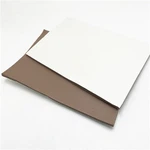
Hey there! As a supplier of Popular PVC Foam Board, I often get asked this burning question: "Does popular PVC foam board emit harmful substances?" It's a valid concern, especially when you're thinking about using these boards in various applications, whether it's for construction, decoration, or DIY projects. So, let's dive right in and explore this topic together.
First off, let's understand what PVC foam board is. PVC stands for polyvinyl chloride, which is a type of plastic. PVC foam boards are made by foaming PVC resin, along with other additives like stabilizers, plasticizers, and blowing agents. These additives play crucial roles in giving the foam board its desired properties, such as flexibility, durability, and light - weight.
Now, the big question about harmful substances. One of the main concerns with PVC products in general is the release of volatile organic compounds (VOCs). VOCs are chemicals that can vaporize at room temperature and may have adverse effects on human health. Some common health issues associated with VOC exposure include eye, nose, and throat irritation, headaches, and in more severe cases, damage to the liver, kidneys, and central nervous system.
However, when it comes to popular PVC foam boards, the situation isn't as straightforward. Modern manufacturing processes have come a long way in reducing the emission of harmful substances. Most reputable manufacturers, including those I source from, adhere to strict quality and safety standards. They use high - quality raw materials and advanced production techniques to minimize the presence of VOCs and other harmful chemicals in the final product.
For example, the stabilizers used in PVC foam boards are carefully selected to ensure they are safe and effective. In the past, some stabilizers contained heavy metals like lead and cadmium, which are known to be toxic. But nowadays, manufacturers are increasingly using non - toxic stabilizers that are free from these heavy metals. This not only makes the PVC foam boards safer for human use but also more environmentally friendly.
Another factor to consider is the plasticizers. Plasticizers are added to PVC to make it more flexible. In the past, some plasticizers, such as phthalates, were found to be potentially harmful. Phthalates have been linked to reproductive and developmental problems in animals and humans. But again, the industry has responded to these concerns. Many manufacturers now use alternative plasticizers that are considered safer, such as bio - based plasticizers.
It's also important to note that the emission of harmful substances from PVC foam boards can vary depending on the application and the environment. For instance, if the PVC foam board is used in a well - ventilated area, any potential VOC emissions will disperse more quickly, reducing the risk of exposure. On the other hand, if the board is used in a confined space with poor ventilation, the concentration of VOCs may build up over time.
Let's talk about some of the specific types of PVC foam boards I offer. We have the Low Density PVC Foam Sheet. This type of foam sheet is lightweight and has excellent insulation properties. It's often used in applications where weight is a concern, such as in the automotive and aerospace industries. Thanks to the advanced manufacturing processes, the emission of harmful substances from our low - density PVC foam sheets is minimal.
Then there's the Medium Density PVC Foam For Sealing. This foam is great for sealing applications, as it provides a tight and durable seal. The manufacturing process ensures that it meets high safety standards, so you don't have to worry about harmful emissions when using it for sealing purposes.
And let's not forget the Lightweight PVC Foam Sheet. This sheet is perfect for a wide range of applications, from signage to interior decoration. It's made with high - quality materials and is designed to be safe for both indoor and outdoor use.
To further ensure the safety of our PVC foam boards, we conduct regular quality control checks. We test the products for the presence of harmful substances, including VOCs, heavy metals, and other contaminants. Only products that meet our strict safety criteria are approved for sale.
So, to answer the question "Does popular PVC foam board emit harmful substances?", the answer is that in most cases, modern popular PVC foam boards emit very low levels of harmful substances. However, it's still important to take some precautions. When installing PVC foam boards, make sure the area is well - ventilated. If you have any concerns about the safety of the product, you can always ask for a safety data sheet from the supplier.


If you're in the market for PVC foam boards, whether it's for a small DIY project or a large - scale construction job, I'd love to help. I offer a wide range of high - quality PVC foam boards that are not only safe but also cost - effective. We can discuss your specific requirements, and I'll do my best to provide you with the right product at the right price. So, don't hesitate to reach out if you're interested in purchasing PVC foam boards. Let's start a conversation and see how we can work together to meet your needs.
References
- "Plasticizers in PVC: An Overview" - Journal of Plastic Science
- "Safety Standards for PVC Products" - International Plastic Association
- "Reducing VOC Emissions in PVC Manufacturing" - Environmental Science and Technology Journal