


Hey there! As a supplier of PVC Rigid Foam Sheets, I often get asked about the flexural modulus of these products. So, I thought I'd take a few minutes to break it down for you.

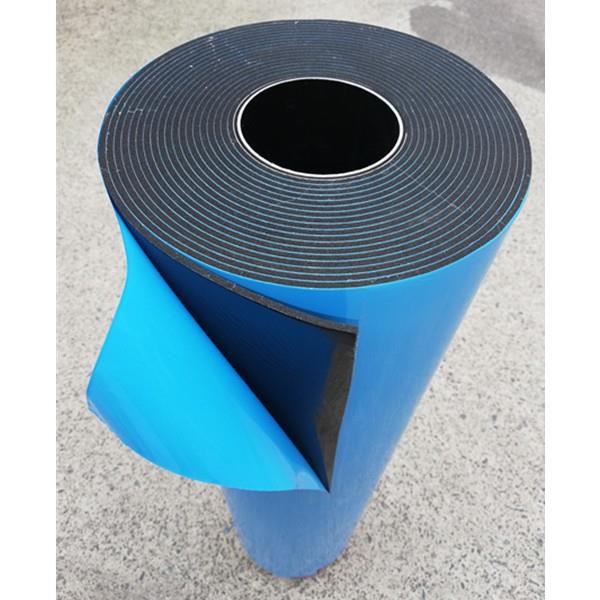
First off, let's talk about what flexural modulus actually means. In simple terms, flexural modulus is a measure of a material's stiffness when it's bent. It tells you how much a material will deflect under a given load. For PVC Rigid Foam Sheets, this is a crucial property because it determines how well the sheet will hold its shape and resist bending or warping in different applications.
Now, the flexural modulus of PVC Rigid Foam Sheets can vary depending on a few factors. One of the main factors is the density of the foam. Generally, higher - density PVC Rigid Foam Sheets tend to have a higher flexural modulus. This means they are stiffer and less likely to bend under load. For example, a High Density PVC Foam Roll will usually have a better flexural performance compared to a lower - density one.
Another factor that affects the flexural modulus is the manufacturing process. Different methods of making PVC Rigid Foam Sheets can result in variations in the internal structure of the foam, which in turn impacts its stiffness. For instance, if the foaming process is not well - controlled, it can lead to inconsistent cell sizes and distribution within the foam, and this can affect the overall flexural properties.
So, why is the flexural modulus so important for PVC Rigid Foam Sheets? Well, it has a big impact on the usability of the sheets in various applications. In construction, for example, PVC Rigid Foam Sheets are often used as insulation or as part of wall panels. A high flexural modulus is essential here because the sheets need to be able to support their own weight and any additional loads without bending or deforming. If the flexural modulus is too low, the sheets may sag over time, which can compromise the structural integrity of the building.
In the advertising and signage industry, PVC Rigid Foam Sheets are also widely used. These sheets are often cut and shaped into different signs and displays. A good flexural modulus ensures that the signs maintain their shape and look professional. You don't want a sign that starts to droop or bend in the middle, right?
When it comes to choosing the right PVC Rigid Foam Sheet for your project, understanding the flexural modulus is key. You need to consider the specific requirements of your application. If you're working on a project where the sheet will be subjected to heavy loads or stress, you'll want to go for a sheet with a high flexural modulus. On the other hand, if the application doesn't require a lot of stiffness, a lower - modulus sheet might be more cost - effective.
But how do you actually measure the flexural modulus of a PVC Rigid Foam Sheet? Well, there are standard testing methods available. One common method is the three - point bending test. In this test, a sample of the PVC Rigid Foam Sheet is placed on two supports and a load is applied at the center. By measuring the deflection of the sheet under the load and using some mathematical calculations, the flexural modulus can be determined.
Now, let's talk about how our PVC Rigid Foam Sheets stack up in terms of flexural modulus. We take great pride in producing high - quality sheets with consistent flexural properties. Our manufacturing process is carefully controlled to ensure that each sheet meets the required standards. Whether you need a PVC Foam Sheet for a small DIY project or a large - scale commercial application, we've got you covered.
We also offer a range of options in terms of density and thickness, which allows you to choose the sheet with the right flexural modulus for your needs. And if you're not sure which one is best for you, our team of experts is always here to help. We can provide you with detailed information about the flexural properties of our different products and guide you in making the right choice.
In addition to the flexural modulus, we also pay attention to other important properties of our PVC Rigid Foam Sheets. For example, we ensure that our sheets have good chemical resistance, which means they can withstand exposure to various chemicals without deteriorating. We also focus on the surface finish of the sheets, making sure they are smooth and easy to work with.
If you're planning to use PVC Rigid Foam Sheets in your project, you might also need PVC Foam Sheet Glue to bond the sheets together. We can recommend some high - quality glues that are compatible with our sheets and will provide a strong and durable bond.
In conclusion, the flexural modulus of PVC Rigid Foam Sheets is a crucial property that you need to consider when choosing the right sheet for your project. It affects the performance and usability of the sheets in a wide range of applications. As a reliable supplier of PVC Rigid Foam Sheets, we are committed to providing you with products that have excellent flexural properties and meet your specific requirements.
If you're interested in learning more about our PVC Rigid Foam Sheets or have any questions about the flexural modulus or other properties, don't hesitate to reach out. We're here to help you make the best choice for your project and ensure its success. Whether you're a contractor, a DIY enthusiast, or an advertising professional, we've got the right PVC Rigid Foam Sheet for you. So, get in touch with us today and let's start discussing your needs!
References
- ASTM D790 - Standard Test Methods for Flexural Properties of Unreinforced and Reinforced Plastics and Electrical Insulating Materials
- Various industry reports on PVC foam sheet manufacturing and properties