



Hey there! As a supplier of PVC Foam Board, I often get asked about the standard hardness of these boards. It's a crucial aspect that can significantly impact the performance and suitability of PVC foam boards for various applications. So, let's dive right in and explore what the standard hardness of PVC Foam Board is all about.
First off, it's important to understand that the hardness of PVC Foam Board can vary depending on several factors. One of the main factors is the manufacturing process. Different methods can result in boards with different densities and hardness levels. Generally, PVC foam boards are made through either extrusion or compression molding. Extruded PVC foam boards tend to have a more uniform structure and can offer a consistent hardness throughout the board. Compression-molded boards, on the other hand, might have some variations in hardness due to the way the material is compressed.
Another factor that affects hardness is the formulation of the PVC resin used. Manufacturers can adjust the chemical composition by adding different additives and plasticizers. These additives can modify the physical properties of the board, including its hardness. For example, adding more plasticizers can make the board more flexible and less hard, while reducing them can increase the hardness.
Now, let's talk about how hardness is measured. The most common method for measuring the hardness of PVC Foam Board is the Shore hardness scale. There are two types of Shore scales commonly used: Shore A and Shore D. The Shore A scale is used for softer materials, while the Shore D scale is for harder ones. PVC foam boards usually fall within the range of Shore D hardness, as they are relatively rigid compared to some other flexible PVC products.

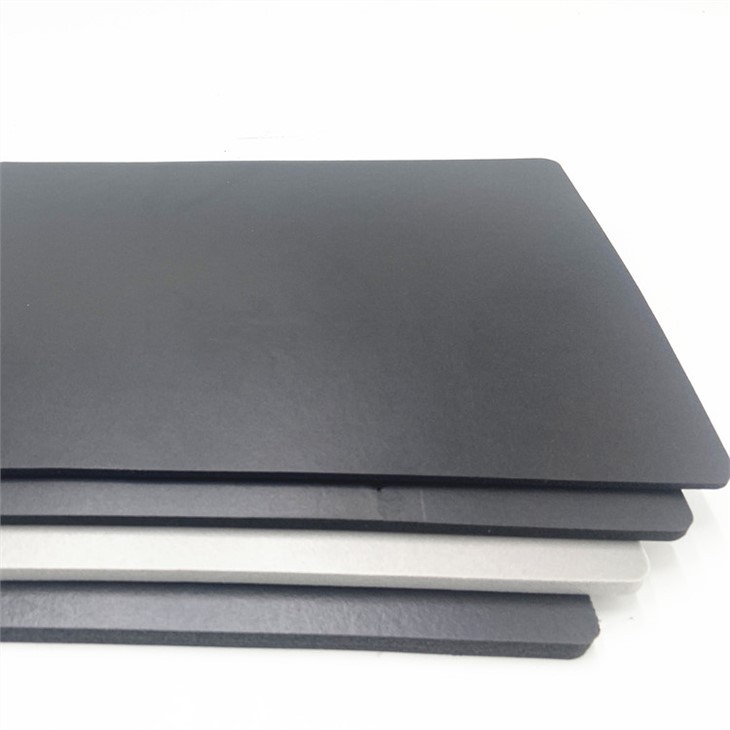
The standard hardness of PVC Foam Board typically ranges from around 40 to 80 on the Shore D scale. Boards with a lower Shore D hardness, say around 40 - 50, are more flexible and can be bent or shaped more easily. They are often used in applications where some degree of flexibility is required, such as in signage that needs to be curved or in packaging where the board needs to conform to the shape of the product.
On the other hand, PVC foam boards with a higher Shore D hardness, around 70 - 80, are very rigid and offer excellent structural support. These boards are ideal for applications where strength and stiffness are crucial, like in construction projects for partitions, wall cladding, or as a substrate for outdoor furniture.
Let's take a look at some specific applications and the appropriate hardness levels for them. For interior signage, a PVC foam board with a Shore D hardness of around 50 - 60 is often a good choice. It provides enough rigidity to hold its shape while still being relatively easy to cut and work with. The board can be printed on easily, and its moderate hardness ensures that it won't warp or bend easily over time.
In the construction industry, for applications like ceiling panels or wall linings, a harder PVC foam board with a Shore D hardness of 70 - 80 is preferred. These boards can withstand the weight and pressure of being installed on walls or ceilings without sagging or deforming. They also offer better resistance to impact and wear, making them suitable for high-traffic areas.
Now, I'd like to introduce some of the PVC foam board products we offer. We have a great selection of Closed Cell High Temperature PVC Foam. This type of foam has a closed-cell structure, which makes it resistant to moisture and chemicals. It also has a high-temperature tolerance, making it suitable for applications where heat is a factor, such as in industrial settings.
Our Fire Retardant PVC Foam Sheet is another excellent product. As the name suggests, it has fire-retardant properties, which are essential for applications in areas where fire safety is a concern, like in public buildings or electrical enclosures. The hardness of this sheet can be adjusted according to the specific requirements of the project, but it generally falls within the standard range for PVC foam boards.
We also offer Flexible PVC Foam Sheet. This sheet has a lower Shore D hardness, making it highly flexible and easy to manipulate. It's perfect for applications where flexibility is key, such as in automotive interiors or in the production of soft signage.
When you're choosing a PVC Foam Board, it's important to consider the specific requirements of your project. Think about the environment in which the board will be used, the amount of stress and strain it will be subjected to, and any special properties you need, like fire resistance or flexibility. By understanding the standard hardness of PVC Foam Board and how it relates to your application, you can make an informed decision and select the right product for your needs.
If you're interested in purchasing PVC Foam Board for your project, I encourage you to get in touch with us. We have a team of experts who can help you choose the right board based on your specific requirements. Whether you need a hard and rigid board for a construction project or a flexible one for a creative signage application, we've got you covered.
In conclusion, the standard hardness of PVC Foam Board is an important characteristic that can vary depending on factors like manufacturing process and resin formulation. Measuring it using the Shore D scale, we find that the typical range is from 40 to 80, with different hardness levels suitable for different applications. We offer a variety of PVC foam board products to meet your diverse needs. So, don't hesitate to reach out and start a conversation about your PVC foam board requirements.
References
- ASTM International standards on plastics hardness testing.
- Industry publications on PVC foam board manufacturing and applications.